Once a failed post-WW2 utopia, Krakow's Nowa Huta neighbourhood has found a new lease on life and is slowly emerging as a tourist destination.
Linked to Krakow by a portion of the Amber Trail Greenway, Tyniec’s limestone cliffs, dense woodland and millennia-old abbey comprise one of Eastern Europe’s most overlooked villages.
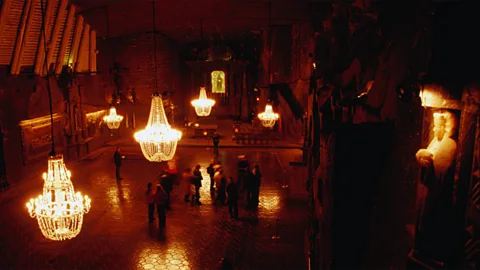
At the Chapel of the Blessed Kinga, built to honor the patron saint of Polish miners, everything is carved out of salt, including the walls, floor, statues – even the chandeliers.
From Bucharest to Budapest, the third annual European Backpacker index found that travelling to the previously pricey continent is actually less expensive than you would think.
From retro restaurants in the boho-cool Kazimierz quarter to fine dining at a woodland manor house, the Polish city is finally ready to be feted for its food.
The annual International Sailing Songs Festival brings more than 200 singing sailors to the Polish city in February to celebrate the art of classic sea shanties.
Kazimierz, a neighbourhood that used to resemble an open-air Jewish heritage museum, has seen an influx of new businesses and cultural centres that celebrate the area’s heritage daily.
Cafe culture is celebrated on a grand scale in the historic Polish city of Krakow – the opportunity to relax with a cup of strong black coffee is never far away.
After many small Polish breweries were liquidated post World War II, craft beer has returned to Poland’s second city, with entrepreneurs driven more by passion than profit.